
What’s Happening?
The European Union is transitioning to a climate-neutral and circular economy. This means products must become more energy-efficient, sustainable, reusable, repairable, and recyclable. Given the significant environmental impact of the textile and clothing sector, the European Commission is examining ways to improve sustainability claims for clothing and footwear.
To combat “greenwashing,” the European Commission introduced the Green Claims Directive in March 2023. This directive aims to establish clear, enforceable standards for environmental claims so consumers can trust companies’ sustainability assertions—a goal we fully support.
To measure sustainability in a scientifically grounded, objective, and fair manner, the EU is developing standardized methods for various product groups/categories. These rules are known as the Product Environmental Footprint Category Rules (PEFCR), with the PEF (Product Environmental Footprint) as the methodology.
This could provide a solid foundation for fully transparent consumer information and support the green transition the EU aims to achieve—but only if textile sustainability is measured reliably and credibly.
However, here lies the problem. The PEF methodology for textiles, clothing, and footwear currently does not adequately reflect environmental impact and requires further development to ensure fair and balanced outcomes for all fibers. Fortunately, the European Commission and the European Parliament acknowledge this and have not yet implemented the PEF.
But the European Council wishes to adopt a single directive as soon as possible and has expressed its intent to use the PEF in its current form. So far, only Germany and Austria have voted against it, finding the PEF insufficient. Unfortunately, other European countries, such as the Netherlands voted in favor!
Why the Current PEF is Inaccurate
Textiles, clothing, and footwear comprise a broad product group that includes both technical and natural raw materials processed in vastly different ways. This makes it challenging to develop a single generic methodology.
- PEF is an effective method for industrial products, where intensive production is often considered more environmentally friendly, but provides inaccurate results for agricultural products. It overlooks the benefits of extensive farming, which preserves nature better and is less harmful to the environment than intensive farming.
- The assumption that products made from stronger fibers have a longer lifespan is incorrect. Textiles, clothing, and shoes made from natural fibers—though physically weaker than synthetic variants—are often used and kept longer.
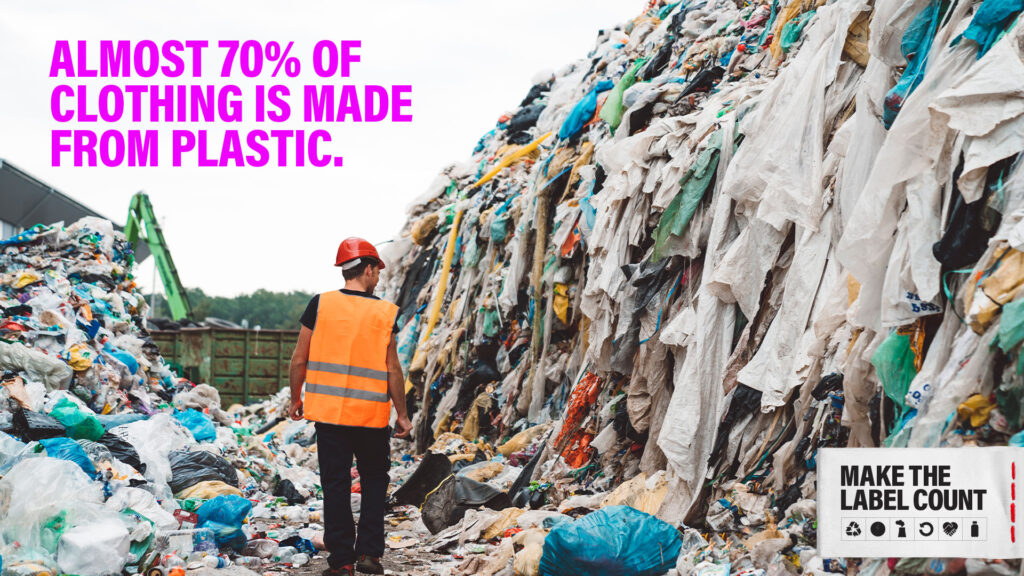
- PEF ignores key environmental impacts, such as microplastic pollution and plastic waste, treating them as “additional information” that doesn’t influence the PEF score.
- A French study by DEFI and IFTH shows that PEF favors fast fashion and synthetic fibers, while other methodologies, such as Ecobalyse and EDS, better recognize sustainable choices.
- None of the 16 PEF indicators currently measure circularity, which conflicts with the EU’s Circular Economy Action Plan (CEAP). Fossil-based materials are neither renewable nor circular.
The Council’s current stance on the PEF has significant consequences for natural fibers. The PEF is likely to become the “independent and reliable” standard for labeling sustainability in future policies. It is therefore crucial that our EU representatives (Council Attachés) understand the risks and implications of the current PEF.
Three Easily Implementable Improvements to the PEF
To ensure a fair and balanced outcome for all fibers, the PEF methodology and associated rules must be improved to accurately reflect environmental impact. Based on extensive research by independent experts, the following recommendations are made to the EU Council:
- Add an indicator for microplastics. This would align the PEF with EU policy. Not including this indicator effectively means microplastic emissions are given no weight, potentially increasing plastic use and pollution.
- Add an indicator for plastic waste. Although the EU aims to reduce plastic waste, the PEF does not account for it. Synthetic fibers are minimally recycled, and plastic-based clothing is often incinerated, releasing fossil CO2. An indicator for plastic waste would help align the PEF with EU priorities.
Add an indicator for circularity. The PEF currently barely measures circularity, despite the EU’s focus on a circular economy. Fossil materials are non-renewable. An indicator for circularity is needed to assess the sustainability of materials from renewable and non-renewable sources.
PEF explained by Make the Label Count
Last Chance!
This month, January 2025, final negotiations between EU legislators on the Green Claims Directive for textiles, clothing, and footwear will take place. This offers a crucial last opportunity to influence the outcome by contacting decision-makers in your countries. Member states determine the positions of their attachés in the EU Council, making your efforts to explain why and how the PEF needs to be adjusted indispensable.
According to the current PEF method, polyester is the most sustainable textile material after linen, while wool is considered the least sustainable!
Take Action!
- Reach out to relevant contacts directly.
Use your network in local/regional governments, ministries, or other stakeholders. Your contacts can bring these shared concerns to the attention of Council Attachés negotiating this dossier.
- Share on Social Media.
Tag @MaketheLabelCount @FibershedNederland @europeanfibershed and repost relevant content.
Together, we can make a greater impact!
Message from Make the Label Count Partners
Your Support is Vital!
Your knowledge and network make you uniquely positioned to influence outcomes. Together with other MTLC coalition members, Fibershed organizations, and partners across the EU, we can ensure that the PEF does not become the standard method for Green Claims.
For more information, visit the Make the Label Count website.
If you have questions or need extra support, feel free to contact europe@fibershed.nl
Thank you for your support for this important campaign, on behalf of Fibershed and Make the Label Count
MTLC_Green-Claims-Directive_Policy-Brief_2024-15.11.24